
Ecological Function Evaluation of Soil and Water Conservation Measures for Power Transmission and Transformation Project Construction Based on Remote Sensing and it’s Improvement Path
June 6, 2025
Assessing ecological functions is critical for determining the
efficacy of soil and water conservation measures, especially during the
development of power transmission and transformation projects. Efficient
conservation practices are essential for reducing ecological effects and
guaranteeing sustainable development. This research aims to create a resilient
model, Ecological Function Prediction for Conservation Effectiveness (EFPCE) that will classify conservation effectiveness as either effective or
ineffective. The goal is to improve prediction accuracy and offer actionable
insights for better conservation tactics. The EFP-CE model combines many
analytical methods: Missing values are imputed using Support Vector
Regression (SVR) and outliers are detected and removed using Euclidean
distance. Categorical variables are converted using label encoding, while
numerical attributes are subjected to Min-Max normalization. An ensemble
feature selection technique integrates filter and wrapper methods to find
important predictors, while cluster-based oversampling fixes data imbalance.
The dataset is separated into training and testing sets. A Bagged Gradient
Boosting model is trained and assessed to forecast conservation efficiency. The
proposed model was evaluated using a ten ecological function assessment
attributes dataset. The Bagged Gradient Boosting model obtained 93%
accuracy, 91% precision, 89% recall, an F1-score of 90%, and a Matthews
Correlation Coefficient (MCC) of 82%, suggesting strong predictive
effectiveness in evaluating conservation measures. The EFP-CE model
demonstrates how machine learning methods can be integrated to improve the
assessment of conservation measures. By enhancing prediction accuracy, this
research presents helpful knowledge for policymakers and stakeholders
participating in environmental safety during infrastructure projects, eventually
adding to more sustainable construction procedures.
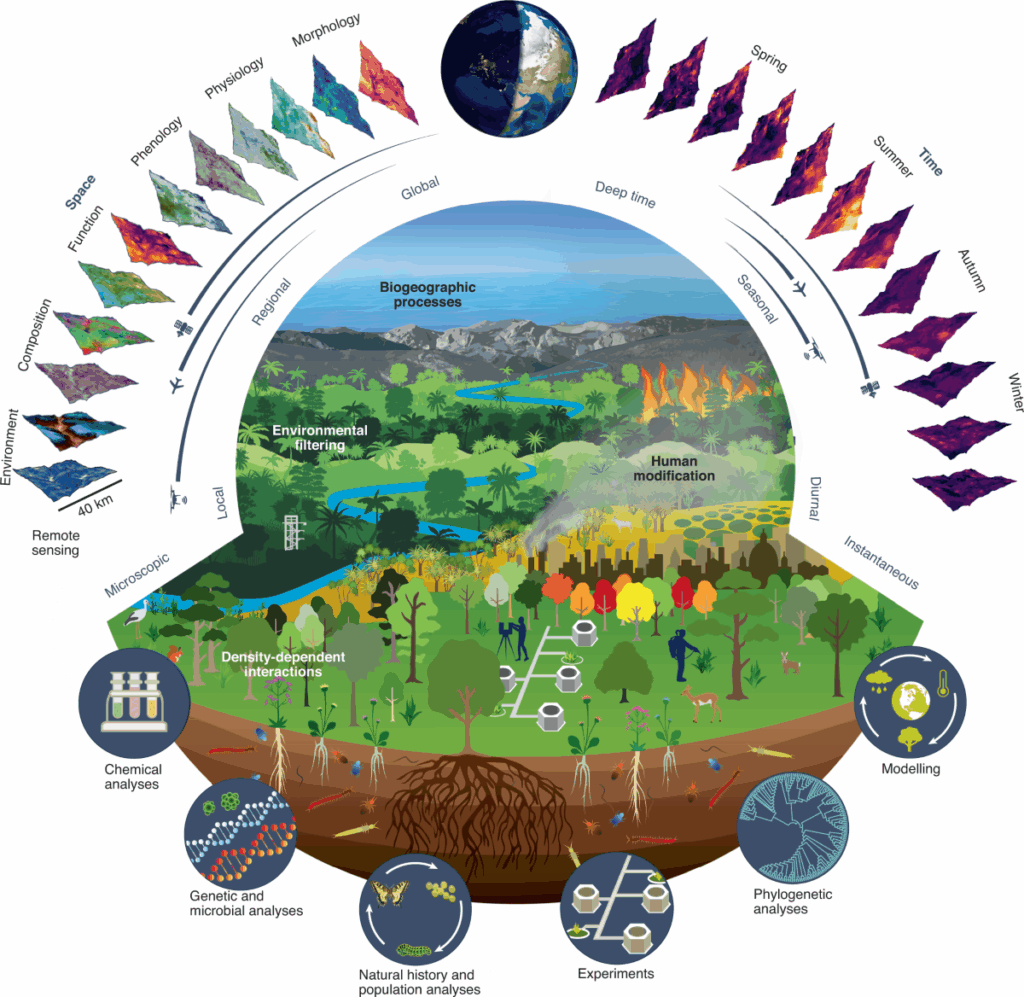
The growing need for infrastructure construction, especially power transmission and transformation projects, has created important environmental difficulties (Lian et al., 2022). These projects frequently disrupt natural ecosystems, causing soil erosion, poor water quality, and biodiversity loss (Wang et al., 2023). As a response to these difficulties, efficient soil and water conservation measures have become essential to reduce negative ecological effects (Chen et al., 2020). The assessment of ecological functions related to these conservation procedures is critical for calculating their efficacy and guaranteeing sustainable implementation (Bian et al., 2024). By evaluating the ecological results of conservation tactics, stakeholders can develop informed decisions that encourage environmental wellness while also promoting infrastructure growth (Li et al., 2020). Figure (1) depicts the interdependence of different ecological features, like vegetation cover, soil erosion rates, and water quality indices, which all contribute to the evaluation of conservation efficiency. This figure emphasizes the intricacy of ecological systems and the requirement for an extensive assessment framework that incorporates various data sources and analytical methods.
The performance evaluation was carried out on an Aspire 3 system outfitted with a high-performance Intel configuration that was designed to manage intensive computational tasks and big datasets. The system features Yang Han et al. / American Journal of Engineering and Applied Sciences 2025, 18 (2): 55.66 DOI: 10.3844/ajeassp.2025.55.66 62 an Intel Core i7-1260P processor with a 12-core architecture that balances processing power and energy efficiency. The system, which runs at 2.1 GHz and has 64 GB of RAM, can handle intricate algorithms and datasets with ease. The 18 MB L3 cache improves data retrieval speeds, increasing the entire system's efficiency. JDK 1.8 was utilized for software development, along with Apache NetBeans IDE 15, to create a stable environment for coding, debugging, and testing algorithms. This configuration enabled smooth interaction with the system's resources and allowed for efficient performance evaluation. Table (2) shows the details of the experimental setup.