
Christ The King Engineering College

Articles

Article

June 6, 2025
Ecological Function Evaluation of Soil and Water Conservation Measures for Power Transmission and Transformation Project Construction Based on Remote Sensing and it’s Improvement Path

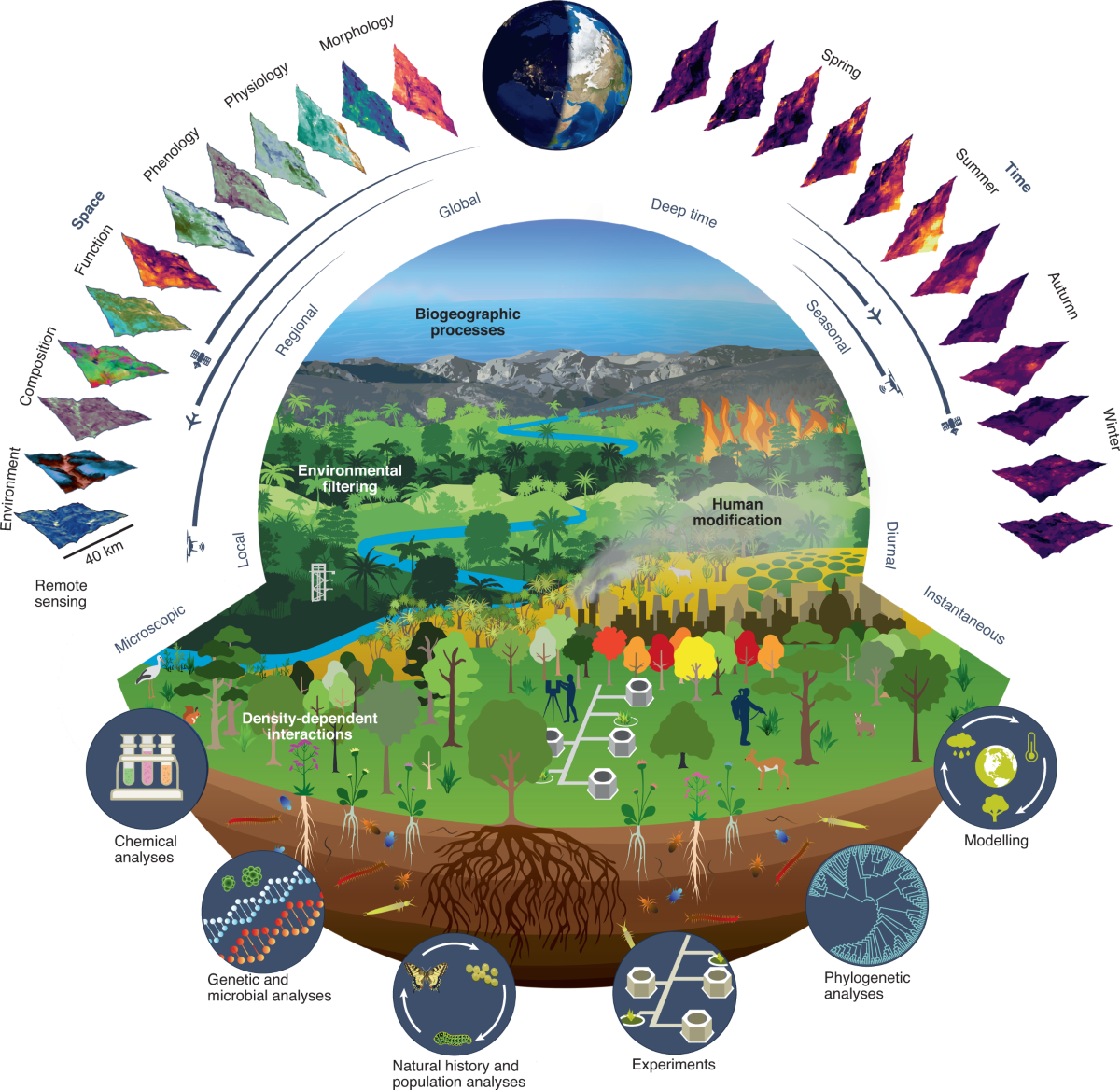
The growing need for infrastructure construction, especially power transmission and transformation projects, has created important environmental difficulties (Lian et al., 2022). These projects frequently disrupt natural ecosystems, causing soil erosion, poor water quality, and biodiversity loss (Wang et al., 2023). As a response to these difficulties, efficient soil and water conservation measures have become essential to reduce negative ecological effects (Chen et al., 2020). The assessment of ecological functions related to these conservation procedures is critical for calculating their efficacy and guaranteeing sustainable implementation (Bian et al., 2024). By evaluating the ecological results of conservation tactics, stakeholders can develop informed decisions that encourage environmental wellness while also promoting infrastructure growth (Li et al., 2020). Figure (1) depicts the interdependence of different ecological features, like vegetation cover, soil erosion rates, and water quality indices, which all contribute to the evaluation of conservation efficiency. This figure emphasizes the intricacy of ecological systems and the requirement for an extensive assessment framework that incorporates various data sources and analytical methods.

June 7, 2025
Machine Learning-Based Traffic Prediction in 4G LTE Networks. Case Study of a Mobile Operator in Cameroon

The evolution of mobile networks from 2-5G coupled with a permanent need for broadband services by mobile subscribers has led to a significant surge in mobile internet resources and traffic. optimization of the available resources globally (Guo et al., 2018; Silva et al., 2018).The usage of applications like video streaming in both normal and high definition, online gaming, online conferences, and meetings by mobile subscribers has deeply improved this growing mobile data traffic. Many reports demonstrate that an important part of Internet traffic generated from mobile users' equipment is due to multimedia content (Gember et al., 2011; Huang et al., 2013; Maier et al., 2010; Shafiq et al., 2011). According to Ericsson (2020) report, video content alone accounted for 60% of mobile data traffic, with projections suggesting that this figure will rise to 74% by 2024 (Ericsson, 2018b). Additionally, it was anticipated in 2018 that by 2022, global traffic resulting from mobile data consumption will be twelve times higher than it was in 2018 (Ericsson, 2018a). Mobile carriers have evolved into a complicated entity designed to meet the evergrowing demand for mobile traffic (Damnjanovic et al., 2011). The rising demand for mobile data, coupled with increasing network complexity and the expanding number of connected users, presents significant challenges in both the control plane and user plane for radio resources management. Understanding mobile users' data usage patterns is a problem for content providers as a result of the increase in mobile users and mobile traffic demand. Mobile network operators then have the obligation to efficiently manage the available resources based on the data usage consumption and behavior of their subscribers. According to research and common usage of mobile devices, their energy consumption is greatly impacted by the type of active applications and their respective data usage pattern (Huang et al., 2013). It is crucial for service and content providers, as well as end users, to understand the data usage trends and behavior of mobile users across various markets and geographical areas. Mobile network carriers can use this information to predict the growing demand for mobile data usage (Cisco, 2017), and to do proper capacity planning and efficient network

June 7, 2025
Economic Evaluation of Standalone Hybrid PV–H2 with Storage System

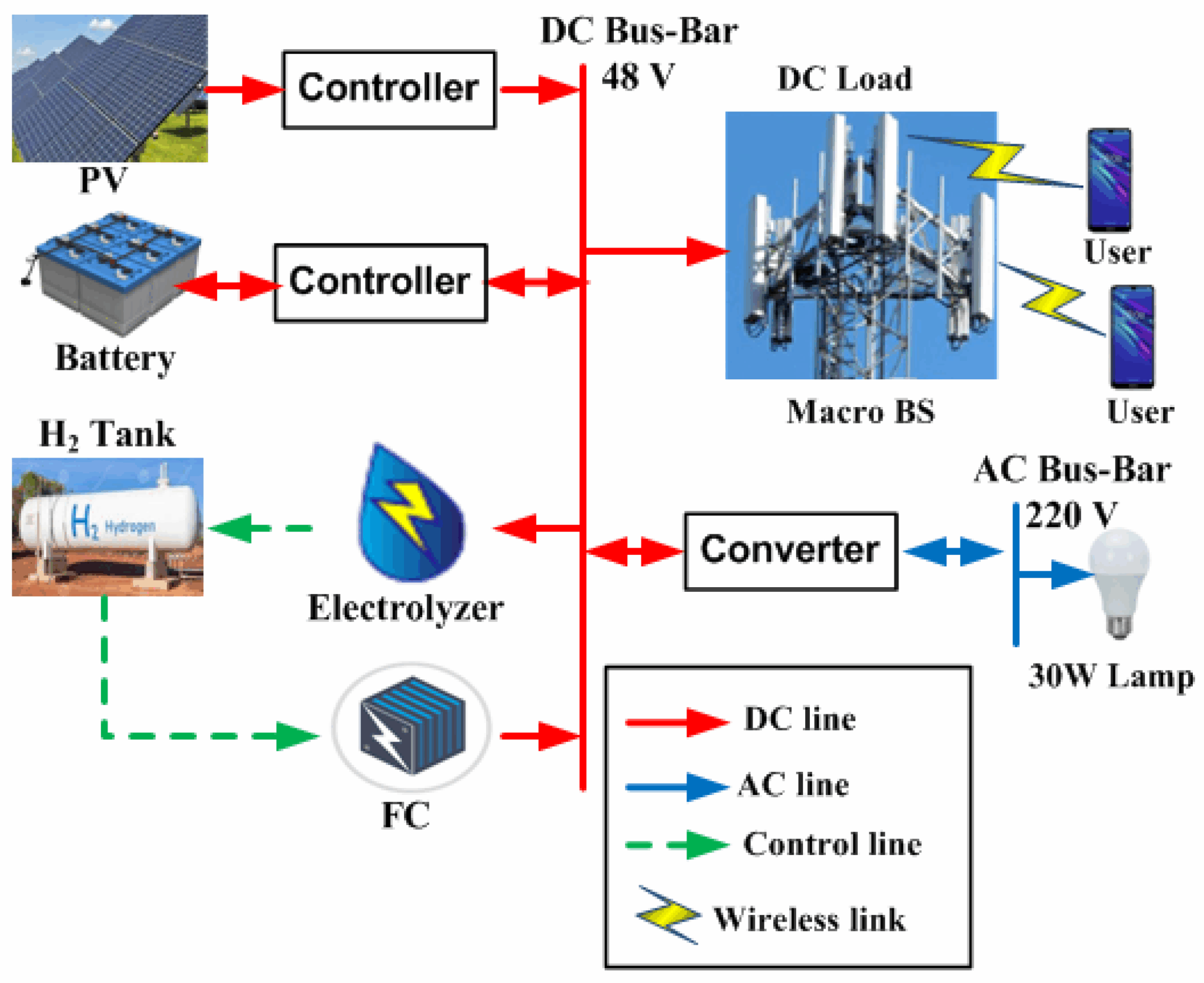
Energy storage using a battery is increasingly preferred. However, studies have shown that the ability of a battery to store energy is limited. The battery needs to be installed on the standalone system to be higher to store more energy. Besides, the battery has weaknesses that can cause environmental pollution problems (Hosseini and Wahid, 2020). However, hydrogen gas is clean and environmentally friendly; renewable energy can store more considerable energy (Dawood et al., 2020). Hence, the hybrid system using a standalone PV-H2 system is more cost-effective for standalone operation. A standalone PV system using this hybrid energy has the advantage that more reliable energy is provided and is more efficient than using a standalone system fed by a PV system alone with a storage battery system of the same rating (Nasser et al., 2022). A DC-DC inverter has been invented to produce hydrogen gas from solar modules. Although the invention has some advantages while working, its initial cost is relatively expensive. There are some disadvantages and solutions to problems in standalone. PV uses hydrogen fuel cell systems, as described in the discussion section. Using Photovoltaic (PV) modules, solar energy is an essential and accessible source. The standalone Photovoltaic (PV) system provides energy everywhere, especially where the electricity power distribution network coverage is unavailable (Barhoumi et al., 2022). A problem occurs because the electricity produced by PV modules is not constant and reliable. In such cases, a standalone system alone cannot provide continuous and reliable energy. There is one reported study of a standalone PV system using hybrid energy for the remote microwave repeater. The solutions to end the problem of unwavering solar radiation are to store the excessive electricity produced during the previous days, function with a diesel generator system, and use a Photo Electrochemical (PEC) process to make hydrogen gas. Background and Rationale The first difference concerning other research focused on the same topic was the energy storage implementation, which is fundamental in an off-grid facility without a robust monitoring system and usually outside contractual services (Gerlach and Bocklisch, 2021). We considered a hydrogen storage bank of reduced capacity, dimensioned according to the designer’s preference expressed by mixing different storage strategies and working cycles. Such banks can modify the load profile and reduce the shortcomings, possibly reducing the storage volume and tank pressure (Crespi et al., 2021). These are the days of sustainable and distributed generation, led by Photovoltaic (PV) systems, possibly coupled to electrolyzers for direct production of Hydrogen (H2) gasinstead of injection only within Power-to-Gas systems (PtG). Such a combination has been extensively analyzed and economically evaluated, but for power plants much larger than a typical load size and with typically no energy storage capacity due to the continuous H2 production (Gutiérrez-Martín et al., 2024). The present work was motivated to evaluate the expected behavior for standalone hybrid PV–H2 systems in a standalone small grid, characterized by household, commercial, and industrial loads located in an off-grid facility, i.e., one that is experiencing several problems for connection and that anyway is interested in preferring emission-free solutions (Monforti Ferrario et al., 2021).